


In the evolving landscape of enterprise architecture, selecting the appropriate modeling language framework is critical to ensuring clarity, alignment, and strategic impact. ArchiMate, a widely adopted standard for enterprise architecture modeling, offers two distinct frameworks: the Core Framework and the Full Framework. The choice between them depends on the scope, depth, and purpose of your architectural modeling efforts.
This article explores both frameworks in detail, outlines when to use each, and provides guidance for aligning your modeling approach with your enterprise’s strategic objectives.
Understanding the ArchiMate Frameworks
ArchiMate is designed to support a comprehensive view of enterprise architecture across multiple layers — from business processes to technology infrastructure and beyond. The language is structured around domains, which represent different aspects of an organization. The two primary frameworks differ in scope and capability:
-
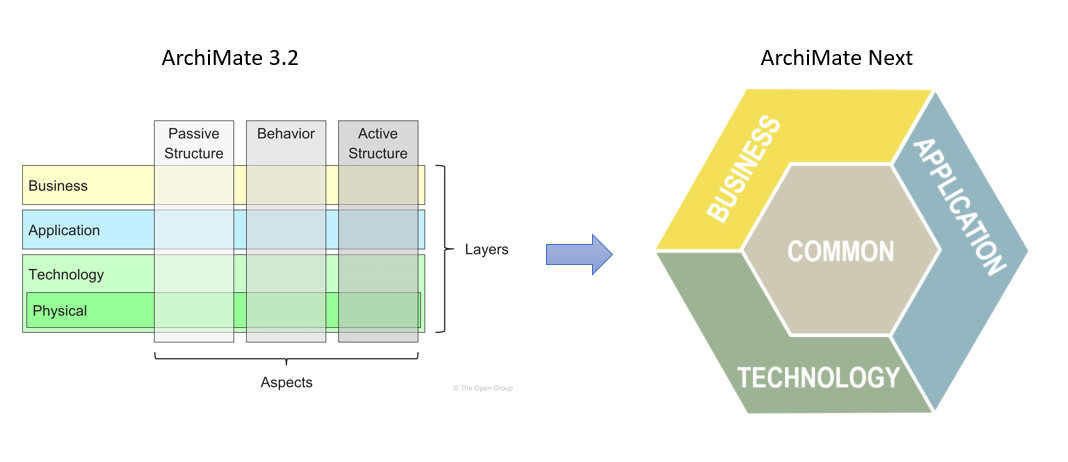
Core Framework: A streamlined, foundational structure for modeling operational systems.
-
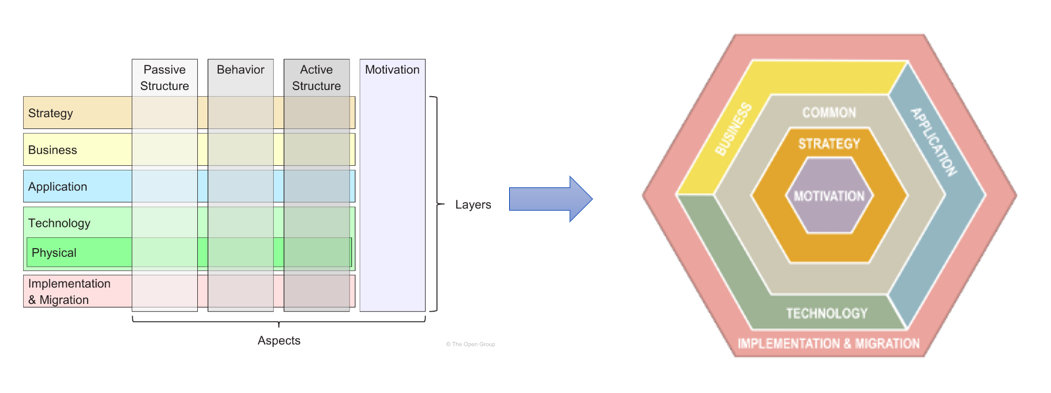
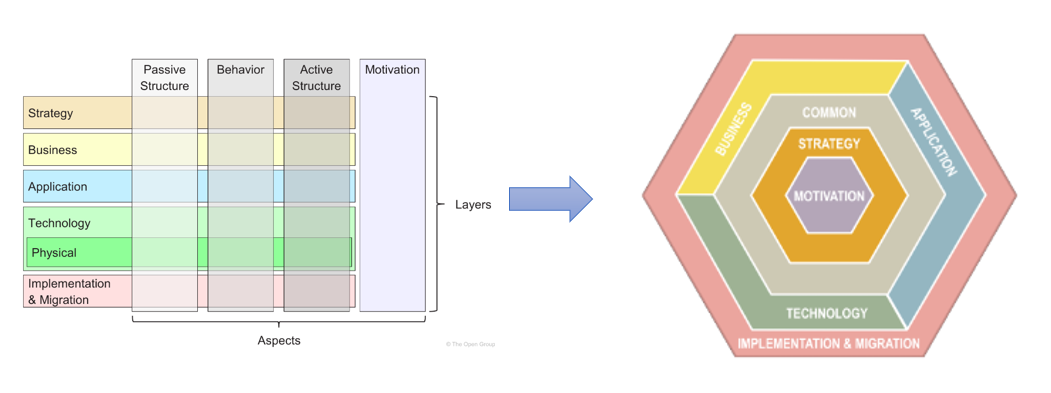
Full Framework: An expanded, holistic model that includes strategic, motivational, and evolutionary dimensions.
Let’s dive into each.
The ArchiMate Core Framework: Modeling the “What” and “How”
When to Use the Core Framework
Use the Core Framework when your focus is on describing the operational structure and behavior of an enterprise. It’s ideal for modeling systems in their current state — what they do, how they’re organized, and how they function day-to-day.
This framework is particularly effective for:
-
Designing or documenting IT systems and their relationships to business functions.
-
Supporting system integration, process optimization, or technical documentation.
-
Communicating with technical teams, developers, or operational managers.
✅ Best for: “At rest” modeling — understanding how things work today.
Key Domains in the Core Framework
The Core Framework consists of four interrelated domains:
-
Common Domain
Provides reusable, cross-domain elements such as Process, Service, Product, and Contract. These are foundational building blocks used throughout the other domains. -
Business Domain
Models the organization’s structure, roles, functions, and value delivery. Includes elements like Business Actor, Business Process, Business Service, and Business Function. -
Application Domain
Describes software applications and their interactions. Focuses on Application Component, Application Service, Application Function, and their relationships to business and technology layers. -
Technology Domain
Represents the underlying IT infrastructure — hardware, networks, and communication systems. Includes Node, Device, System Software, and Network.
🔍 Focus: The Core Framework answers the questions:
What does the organization do?
How is it structured and executed?
It does not inherently address why these structures exist or how they will evolve.
The ArchiMate Full Framework: Enriching Architecture with Purpose and Vision
When to Use the Full Framework
Use the Full Framework when your architectural work involves change, strategy, stakeholder alignment, or long-term transformation. It’s essential for communicating with executives, board members, and other non-technical stakeholders who need to understand the reasons behind architectural decisions.
This framework is recommended when:
-
Defining strategic goals and transformation roadmaps.
-
Justifying investment in new systems or digital initiatives.
-
Aligning IT with business objectives.
-
Managing complex change programs or digital transformation projects.
✅ Best for: Modeling architecture in motion — understanding why, how, and when changes occur.
Additional Domains in the Full Framework
The Full Framework extends the Core Framework by adding three specialized domains:
-
Motivation Domain
Captures the “Why” behind architectural decisions. This domain models:-
Drivers: Business or external forces (e.g., market pressure, regulation).
-
Goals: Desired outcomes or objectives.
-
Requirements: Functional and non-functional needs.
-
Stakeholders: Individuals or groups affected by or influencing the architecture.
🌟 Symbolic Significance: In the ArchiMate Full Framework diagram, Motivation is placed at the center, symbolizing that all architectural decisions are driven by stakeholder motivations and strategic intent.
-
-
Strategy Domain
Addresses the long-term direction of the enterprise. It includes:-
Capabilities: What the organization can do (e.g., “Customer Onboarding”).
-
Resources: Assets required to deliver capabilities (e.g., people, technology).
-
Value Streams: End-to-end flows of value creation from customer to organization.
This domain helps bridge the gap between strategy and execution.
-
-
Implementation and Migration Domain
Models the evolution of the architecture over time. It includes:-
Work Packages: Projects or initiatives that drive change.
-
Deliverables: Tangible outcomes of projects.
-
Plateaus: Stable, intermediate states during transformation (e.g., “Phase 1 Complete”).
This domain enables the creation of detailed roadmaps and transformation plans.
-
🔍 Focus: The Full Framework answers the questions:
Why are we doing this?
What strategic goals are we pursuing?
How will we get there over time?
Framework Selection Guide: Matching Use Case to Framework
| Use Case | Recommended Framework | Key Domains Involved |
|---|---|---|
| Operational Modeling (e.g., current-state system diagrams) | ✅ Core Framework | Business, Application, Technology, Common |
| Stakeholder Alignment & Communication | ✅ Full Framework | Motivation |
| Strategic Planning & Visioning | ✅ Full Framework | Strategy |
| Transformation, Roadmapping & Change Management | ✅ Full Framework | Implementation & Migration |
| Integrated Digital Twin or Enterprise-Wide Architecture | ✅ Full Framework | All Domains |
💡 Pro Tip: Even if you start with the Core Framework, consider upgrading to the Full Framework as your architecture matures — especially when planning change or seeking executive buy-in.
Strategic Implications: Why the Full Framework Matters
While the Core Framework is sufficient for modeling systems in a stable, operational state, the Full Framework is essential for enterprise agility and value delivery. Without it, architecture risks becoming a technical exercise disconnected from business purpose.
By incorporating Motivation, Strategy, and Implementation & Migration, the Full Framework enables:
-
Clear justification of architectural investments.
-
Alignment between business goals and IT initiatives.
-
Transparent communication across organizational levels.
-
Effective tracking of transformation progress over time.
In short, the Full Framework turns architecture from a descriptive tool into a strategic enabler.
Conclusion: Choose Wisely, Model Strategically
Selecting between the Core Framework and the Full Framework is not about one being better than the other — it’s about choosing the right tool for the job.
-
Use the Core Framework for operational clarity and system-level design.
-
Use the Full Framework for strategic alignment, change management, and enterprise-wide coherence.
As enterprises increasingly rely on digital transformation and agile delivery, the ability to model not just what is built, but why and how it evolves, becomes paramount. The ArchiMate Full Framework provides the depth and context needed to deliver architecture that truly drives business value.
🎯 Final Thought:
Architecture is not just about systems — it’s about purpose. The Full Framework ensures your architecture speaks the language of strategy, motivation, and evolution.
- Comprehensive Tutorial: Generating ArchiMate Diagrams with AI: This in-depth tutorial demonstrates how to use Visual Paradigm’s AI diagram generator to create ArchiMate diagrams and viewpoints efficiently.
- Ultimate Guide to C4 Model Visualization Using Visual Paradigm’s AI Tools: A comprehensive guide on leveraging AI-powered tools to automate and enhance C4 model visualization for smarter software architecture design.
- Visual Paradigm: The Premier Tool for ArchiMate EA Modeling: An overview of Visual Paradigm as a leading enterprise architecture tool for creating and managing ArchiMate models to support business and IT alignment.
- Introducing AI-Powered ArchiMate Viewpoints Generator in Visual Paradigm: This release details an AI-driven generator that automates the creation of enterprise architecture views, significantly enhancing modeling accuracy.
- The Ultimate Guide to C4-PlantUML Studio: This resource explains how the studio combines AI-driven automation, C4 model clarity, and PlantUML’s flexibility to revolutionize architecture design.
- A Comprehensive Guide to Visual Paradigm’s AI-Powered C4 PlantUML Studio: This guide explores a purpose-built tool that transforms natural language into correct, layered C4 diagrams across the four core levels.
- Generating and Modifying C4 Component Diagrams with AI Chatbot: A specialized tutorial demonstrating how to use the AI-powered Chatbot to create and iteratively refine a C4 Component Diagram for specific system architectures.
- The Essential Guide to ArchiMate: Strengths and Overcoming Challenges with AI: This guide explains the framework’s mechanics and how AI-powered generation addresses traditional disadvantages of ArchiMate modeling.
- ArchiMate Tutorial: Guide to Enterprise Architecture Modeling: A beginner-friendly resource providing step-by-step instructions on creating and using ArchiMate diagrams for structured enterprise modeling.
- AI ArchiMate Diagram Generator Features: This page details the advanced capabilities of the generator, which uses natural language processing to build standard-compliant ArchiMate diagrams.
Related posts:
 ArchiMate 4: A New Era in Enterprise Architecture Modeling
 ArchiMate Next: A New Era in Enterprise Architecture Modeling with the Hexagonion Framework
 ArchiMate NEXT: A Comprehensive Guide to the Evolution of Enterprise Architecture Modeling
The Central Hub of the Hexagonion Framework in ArchiMate Next: A Paradigm Shift in Enterprise Architecture Modeling
ArchiMate NEXT: A Comprehensive Guide to the Evolution of Enterprise Architecture Modeling
The Central Hub of the Hexagonion Framework in ArchiMate Next: A Paradigm Shift in Enterprise Architecture Modeling