ArchiMate Relationships Summary
Structural Relationships
| Name |
Representation |
Definition * |
| Composition |
 |
Indicates that an element consists of one or more other concepts. |
| Aggregation |
 |
Indicates that an element consists of one or more other concepts. |
| Assignment |
 |
Expresses the allocation of responsibility, performance of behavior, or execution. |
| Realization |
 |
Indicates that an entity plays a critical role in the creation, achievement, sustenance, or operation of a more abstract entity. |
|
| ArchiMate 3 – Structural Relationships Summary |

Dependency Relationships
| Name |
Representation |
Definition * |
| Serving |
 |
Models that an element provides its functionality to another element. |
| Access |
 |
Models the ability of behavior and active structure elements to observe or act upon passive structure elements. |
| Influence |
 |
Models that an element affects the implementation or achievement of some motivation element. |
|
| ArchiMate 3 – Dependency Relationships Summary |

Dynamic Relationships
| Name |
Representation |
Definition * |
| Triggering |
 |
Describes a temporal or causal relationship between elements. |
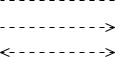
| Flow |
 |
Transfer from one element to another. |
|
| ArchiMate 3 – Dynamic Relationships Summary |

Other Relationships
| Name |
Representation |
Definition * |
| Specialization |
 |
Indicates that an element is a particular kind of another element. |
| Association |
 |
Models an unspecified relationship, or one that is not represented by another ArchiMate relationship. |
| Junction |
 |
Used to connect relationships of the same type. |
|
| Summary of Other ArchiMate Relationships |

ArchiMate Notation: Part 1 – Business Layer
ArchiMate Notation: Part 2 – Application Layer
ArchiMate Notation: Part 3 – Technology Layer
ArchiMate Notation: Part 4 – Technology Layer
ArchiMate Notation: Part 5 – Strategy Layer
ArchiMate Notation: Part 6 – Motivation Extension
ArchiMate Notation: Part 7 – Implementation & Migration Extension
ArchiMate Notation: Part 8 – Relationships